The Atlantic stops being a barrier.
Atlantic exploration, the Columbian Exchange, the Atlantic slave trade — and the world’s first global economy.
In the same period, Atlantic Europe—Portugal first, then Spain, the Netherlands, England, France—built the first global economy. The Columbian Exchange transferred maize, potatoes, and tobacco east; smallpox, sugar, and horses west. About 12.5 million Africans were forced across the Middle Passage. By 1700, Spanish silver from Potosí was paying for Ming Chinese silk. The world’s economy was now one circuit—deeply lopsided, deeply integrated.
The unit, topic by topic.
Beyond the AP rubric: the era behind Unit 4
The 1450–1750 stretch in this unit lives inside a much wider story. For long-form context — themes, primary sources, and the moments that didn’t make the CED — read the era page(s):
4.1
Technological Innovations
Caravels, astrolabes, magnetic compasses—Atlantic navigation.TEC · ENVWhat to studyAtlantic exploration required new technology. The Portuguese caravel combined square and lateen sails so it could tack against the wind. The astrolabe (improved by Muslim astronomers) measured latitude. The magnetic compass (Chinese invention) gave direction at sea. Improved cartography (Mercator projection, 1569) flattened the globe usefully. Ship cannons let small Portuguese craft challenge larger fleets. None of this would have mattered without Atlantic prevailing winds and currents that made return voyages possible. Combined, these technologies turned the Atlantic into a connector instead of a barrier.
Key termsCaravel · Astrolabe · Magnetic compass · Lateen sail · Mercator projectionExam focusCite SPECIFIC technologies and explain HOW each enabled long-distance ocean travel.Primary sourceGomes Eanes de Zurara, Chronicle of Guinea (on Portuguese navigation), 1453 — Project Gutenberg
The official Portuguese chronicler describes Henry the Navigator’s program — the technology, incentives, and ambitions behind Europe’s oceanic expansion.Whose story is missing?“The Chinese vessels are of three kinds: large ships called junks, middle-sized ones called zaws, and small ones called kakams. The large ships have anything from twelve down to three sails, which are made of bamboo rods plaited like mats. … A ship carries a complement of a thousand men, six hundred of whom are sailors and four hundred men-at-arms, including archers, men with shields and arbalists, that is men who throw naphtha. … In the vessel they build four decks, and it has cabins, suites and salons for merchants.” — Ibn Battuta, describing the Chinese ships he saw on the Malabar coast, The Travels of Ibn Battuta A.D. 1325–1354, trans. H.A.R. Gibb (Hakluyt Society, 1994), vol. 4, pp. 813–814
Ahmad ibn Májid (c. 1421–c.1500) was an Arab navigator from Oman whose documented knowledge of Indian Ocean monsoon winds, stars, and sea routes was crucial to Vasco da Gama’s 1498 voyage. European accounts of da Gama’s “discovery” of the sea route to India omit that he hired a Muslim navigator at Malindi. Ibn Májid’s own writings show the Indian Ocean was already fully charted by Arab, Indian, and East African navigators long before European ships entered it. Read the source →
4.2
Exploration: Causes and Events
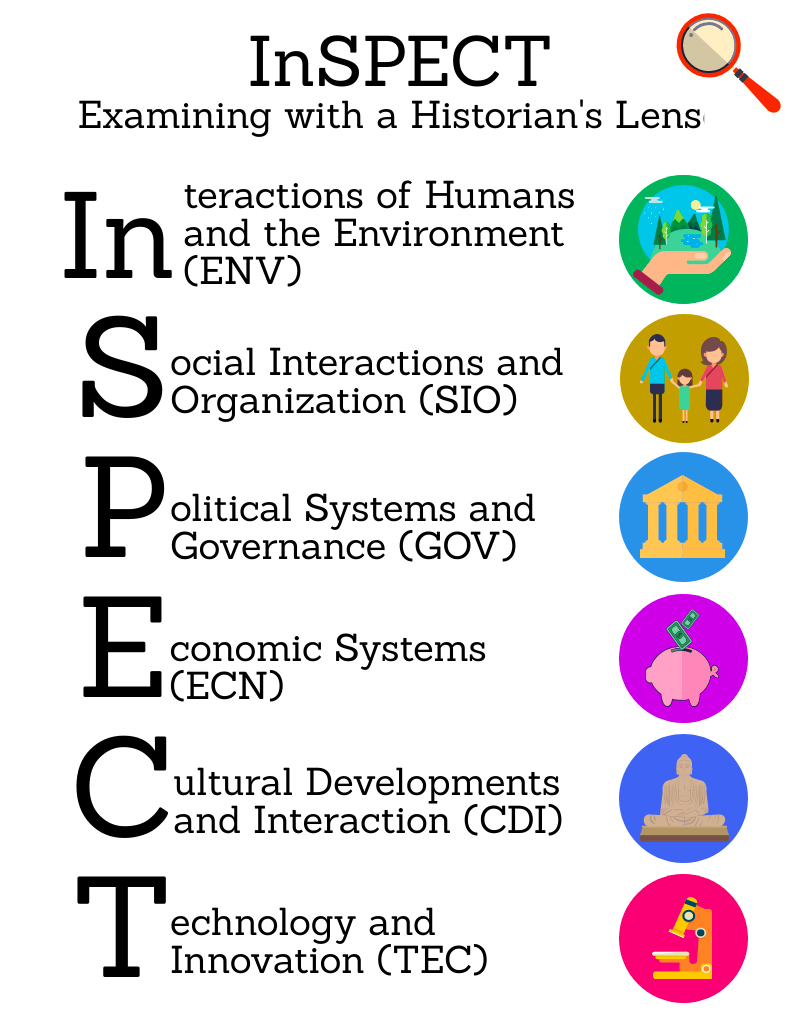
Portuguese, Spanish, English, French, Dutch entries.GOV · ECNWhat to studyCauses: Ottoman control of eastern trade routes after 1453 made western alternatives valuable. Renaissance curiosity, monarchic centralization (Ferdinand and Isabella in Spain), and joint-stock financing all aligned. Events: Henry the Navigator’s school at Sagres trained Portuguese sailors; Bartolomeu Dias rounded the Cape of Good Hope (1488); Vasco da Gama reached India (1498); Columbus sailed for Spain (1492), followed by the Treaty of Tordesillas (1494) dividing new territorial claims between Spain and Portugal; Magellan’s crew circumnavigated (1519–1522). Northern European powers (Netherlands, England, France) followed in the 1600s with chartered trading companies.
Key termsHenry the Navigator · Vasco da Gama · Columbus · Magellan · Treaty of Tordesillas · VOCExam focusDistinguish CAUSES (technology, money, motive) from EVENTS (specific voyages and dates).Primary sourceChristopher Columbus, Letter to Luis de Santángel, 1493 — Early Americas Digital Archive, U. of Maryland
Columbus’s first report of the Caribbean describes the lands, peoples, and potential wealth — launching the Spanish imperial project in the Americas.Whose story is missing?“When the Spaniards arrived, the people fled. No one dared look upon them. Their like had never been seen anywhere before.” — Anonymous Nahuatl informants (Mexica), compiled by Fray Bernardino de Sahagún, Florentine Codex, c. 1576 (translated from Nahuatl); trailing clause dropped — untraceable to any locatable translation, likely an unsourced embellishment
The Florentine Codex preserves accounts of the Spanish conquest gathered by Sahagún from Nahuatl-speaking informants decades after the events. These are not Spanish narratives—they are Mexica memories of first contact as experienced from the inside. AP World covers the causes and timeline of European exploration from the European perspective; this is the same event as seen by the people it encountered. Read the source →
4.3
Columbian Exchange
Crops, animals, microbes, and people across the Atlantic.ENV · ECN · SIOWhat to studyThe Columbian Exchange moved life forms in both directions. To Europe: maize, potatoes, tomatoes, peppers, tobacco, cacao, syphilis, silver. To the Americas: wheat, rice, sugar, horses, cattle, pigs, smallpox, measles, typhus. Demographic effect: Eurasian crops fed a population boom in Europe and Asia; Eurasian diseases killed 50–90% of indigenous Americans within a century. The exchange was profoundly asymmetric—biology favored the colonizers. Forced African migration via the slave trade was the human leg of the exchange.
Key termsMaize · Potatoes · Smallpox · Horses · Sugar · Silver · Demographic catastropheExam focusCite SPECIFIC species moving in each direction. Tie biology to demography to political conquest.Primary sourceBernardino de Sahagún, Florentine Codex (Aztec account of the Conquest), c. 1576 — Getty Research Institute
Aztec informants describe European diseases, horses, and weapons — the Columbian Exchange from the perspective of those who suffered its consequences most severely.Whose story is missing?“There was then no sickness; they had no aching bones; they had then no high fever; they had then no smallpox; they had then no burning chest; they had then no abdominal pain; they had then no consumption; they had then no headache. At that time the course of humanity was orderly. The foreigners made it otherwise when they arrived here.” — Book of Chilam Balam of Chumayel (Yucatec Maya), trans. Ralph L. Roys (1933; repr. 1967), p. 83
The Books of Chilam Balam were compiled by Maya scribes in the 17th century from oral traditions that preserved pre-contact memory. This passage contrasts the pre-contact world with the post-contact epidemic era. The Columbian Exchange is often taught as an exchange of crops and animals; this source documents what the biological dimension of that “exchange” looked like from the side that received smallpox, measles, and typhus without immunity. Read the source →
4.4
Maritime Empires Established
Iberian, then Dutch, English, French Atlantic empires.GOV · ECNWhat to studySpain built the first transatlantic empire on indigenous labor and Andean silver (Potosí). Portugal’s empire was strung along coasts: Brazil for sugar, Mozambique and Goa for Indian Ocean trade. The Dutch Republic’s VOC (1602) dominated the spice trade and South African Cape colony. England’s East India Company would become the empire-on-the-cheap that took over India. France competed in Canada, Louisiana, and the Caribbean. Joint-stock companies, royal charters, and naval power were the institutions of empire.
Key termsPotosí · VOC · East India Company · Triangular trade · Mercantilism · Silver · SugarExam focusDistinguish empires by their economic specialization (silver, sugar, fur, spices) and institutional form (royal vs. corporate).Primary sourceTreaty of Tordesillas, 1494 — Yale Avalon Project
Spain and Portugal divide the non-Christian world between them — the legal framework establishing the first maritime empires and their claims to global trade routes.Whose story is missing?“You come to my port with ships of war, making demands and threatening violence. If you wish to trade with us, come as merchants; if you come as conquerors, you will find us ready for that too.” — The Zamorin of Calicut (Manavikraman Raja), as recorded in Portuguese chronicles, c. 1498
The Zamorin (“lord of the sea”) of Calicut had governed the most prosperous Indian Ocean port for centuries through peaceful trade with Arab, Indian, and Chinese merchants. When Vasco da Gama arrived in 1498 presenting poor trade goods and demanding exclusive access, the Zamorin’s documented response captured the moment the Indian Ocean world first encountered European maritime empire—not as discovery but as intrusion into a functioning system. Read the source →
4.5
Maritime Empires: Effects on Africa
Atlantic slave trade and African states.SIO · GOV · ECNWhat to studyAbout 12.5 million Africans were forcibly transported across the Atlantic between 1500 and 1867; ~10.7 million survived the Middle Passage. African coastal states (Asante, Dahomey, Kongo) became enmeshed in slave-raiding economies—exporting captives in exchange for European firearms, which fueled more raiding. The trade depopulated parts of Central and West Africa, distorted gender ratios, and entrenched warrior elites. Some leaders resisted (Queen Nzinga of Ndongo); most adapted to a system whose worst costs they couldn’t see across the Atlantic.
Key termsAtlantic slave trade · Middle Passage · Asante · Dahomey · Queen Nzinga · Maroon communitiesExam focusAfrica was a participant AND a victim. Cite specific states and their roles. Don’t treat Africa as a passive object.Primary sourceOlaudah Equiano, The Interesting Narrative (on the Middle Passage), 1789 — Project Gutenberg
Equiano’s account of the Middle Passage documents the human cost of the Atlantic slave trade that financed the maritime empires and transformed West Africa.Whose story is missing?“We cannot reckon how great the damage is. So great, Sire, is the corruption and licentiousness that our country is being completely depopulated, and your highness should not agree to this, nor accept it as in your service.” — Afonso I, King of Kongo (Mvemba a Nzinga), letter to King João III of Portugal, 1526 (translated from Portuguese)
Afonso I was the first Christian king of Kongo, who had welcomed Portuguese missionaries and diplomats around 1506. By 1526, the slave trade had grown into a force destroying his kingdom: Portuguese and African traders were capturing and enslaving his own nobles, relatives, and subjects. His letter to the Portuguese king is one of the most direct African royal voices responding to European commercial predation—and one of the only primary sources documenting the Atlantic slave trade from an African ruler’s perspective. Read the source →
4.6
Internal & External Challenges to State Power
Rebellions, religious conflicts, succession crises.GOV · SIOWhat to studyAcross Eurasia and the Americas, states faced rebellions and crises. England’s civil war (1642–1651) executed a king. Cossack revolts shook Russia. Maratha Confederacy fractured the Mughal Empire. Tokugawa Japan barely contained peasant uprisings (ikki). In the Americas, slave revolts—small ones constantly, larger ones occasionally (Stono 1739, Haiti 1791)—and indigenous resistance (Pueblo Revolt 1680) all challenged colonial control. The era’s expanding empires were also vulnerable empires.
Key termsEnglish Civil War · Pueblo Revolt · Maratha Confederacy · Stono · Cossack uprisingsExam focusPick 2–3 specific challenges and explain what they reveal about the state’s strengths and weaknesses.Primary sourceBartolomé de las Casas, A Short Account of the Destruction of the Indies, 1542 — Project Gutenberg
Las Casas documents Spanish violence against Indigenous peoples — a challenge to imperial authority from within the empire itself, and evidence of internal resistance.Whose story is missing?“Return to the customs of your ancestors. Cast away the baptismal water and the names given to you in baptism. Do not call yourselves by Christian names. For the time of the Spaniards is finished, and we will begin again as before.” — Popé (Owá-há-nu), Tewa religious leader, as recorded in Spanish colonial testimonies, c. 1680–1681
Popé led the Pueblo Revolt of 1680, in which Pueblo peoples of present-day New Mexico expelled the Spanish colonial government for twelve years—the most successful Indigenous revolt in North American history. His instructions, recorded in Spanish colonial investigations after the revolt, document a systematic rejection of colonial religious and cultural authority. The revolt succeeded: the Spanish did not return for twelve years, and when they did, the encomienda labor system was never fully restored. Read the source →
4.7
Changing Social Hierarchies
Casta, gender, race, and class in transoceanic empires.SIO · CDIWhat to studySpanish America’s casta system codified racial hierarchy: peninsulares > creoles > mestizos > mulattos > indigenous and Africans. Casta paintings depicted the racial mathematics of empire. In Atlantic slave societies, race and slavery fused into chattel slavery: heritable, lifelong, and racially defined. European women lost public roles as states centralized; non-elite women in colonies worked the plantations and the markets. Gender, race, and class were the three intersecting hierarchies the system enforced.
Key termsCasta · Peninsulares · Creoles · Mestizos · Chattel slavery · Casta paintingsExam focusThe casta system is testable. Memorize the levels and link them to colonial offices, taxation, and inheritance.Primary sourceJuan de Solórzano Pereira, on the Casta System, 1647 — Fordham Internet History Sourcebooks — no longer available online
Spanish legal codes establishing racial hierarchy in the Americas — primary evidence of how colonial empires formalized social inequality to maintain political and economic control.Whose story is missing?“But, lady, as women, what wisdom may be ours if not the philosophies of the kitchen?” — Sor Juana Inés de la Cruz, Respuesta a Sor Filotea de la Cruz, March 1, 1691 (trans. Margaret Sayers Peden)
Sor Juana (1648–1695) was a Mexican nun, playwright, and poet—one of the great writers of the Spanish Golden Age. Born out of wedlock as a criolla, she could not attend university because she was a woman. She entered a convent to have access to books and became the most celebrated intellectual of colonial New Spain. Her “Response” is a formal defense of women’s right to education, written to a bishop who had criticized her intellectual work. It is one of the first feminist arguments in the Americas. Read the source →
4.8
Continuity and Change
How 1450–1750 reshaped the world that came before.ECN · GOVWhat to studyThe biggest CHANGE was integration: by 1700, silver from Potosí flowed to Ming China; tobacco moved to Ottoman courts; sugar from the Caribbean fed European and Asian luxury markets. The biggest CONTINUITY was that most states were still agrarian, monarchic, and religiously legitimated—just operating now within a global economy. The Industrial Revolution and Atlantic Revolutions of Unit 5 would break the second pattern; the global economy itself would only deepen.
Key termsContinuity · Change · Global economy · Silver flow · Sugar economy · Atlantic systemExam focusFor continuity-and-change FRQs, name 2 changes AND 2 continuities, with specific evidence and an explanation of WHY.Primary sourceMatteo Ricci, Journals (on Ming China and Europe compared), c. 1609 — Columbia University
Ricci’s observations of Chinese society alongside European Christianity illustrate the continuities (trade, sophisticated governance) and changes (new exchange networks) of the 1450–1750 period.Whose story is missing?“Born at an evil hour, I have been separated from West Lake for twenty-eight long years. Not a day passes however that West Lake does not enter my dreams; this West Lake of my dreams having never left me for a single day.” — Zhang Dai, preface to Search for West Lake in My Dreams (Xihu Mengxun), c. 1671, trans. Duncan Campbell, China Heritage Quarterly, no. 28 (December 2011), Australian National University
Zhang Dai (1597–1684) was a wealthy Ming dynasty literati who refused to serve the Qing dynasty after the Manchu conquest of 1644. He retreated to the mountains and wrote his memoir as a record of what had been lost. His work documents what “continuity and change” meant for those at the intersection of culture, politics, and loyalty—how the world of a civilization persists even as its political structure is overturned. Read the source →
4.8+
Comparison: 1450–1750
Compare maritime empires; compare with land-based empires.ECN · GOVWhat to studyStrong comparisons: Spanish vs. Portuguese empire structure (territorial vs. coastal); maritime empires vs. land-based gunpowder empires (cannon-armed ships vs. cannon-armed armies); Atlantic vs. Indian Ocean systems (slave-plantation vs. spice-trade extraction); state-led empire (Spain) vs. company-led empire (VOC, EIC). The comparison FRQ rewards 2 similarities, 2 differences, and a causal explanation for at least one of them.
Key termsLand vs. maritime · State vs. company · Extraction · Comparison structureExam focusPick comparisons where the EVIDENCE matters: specific colonies, governance forms, commodities.Primary sourceIbn Battuta vs. Columbus: A Comparative Reader’s Note — Early Americas Digital Archive, U. of Maryland
Columbus’s letter and Ibn Battuta’s Rihla together offer the broadest comparative lens — one shows pre-1450 Indian Ocean networks, the other the new Atlantic system that would displace them.Whose story is missing?“Broken spears lie in the roads; we have torn our hair in grief. The houses are roofless now, and their walls are reddened with blood.” — Anonymous Nahua poet(s), lament for the fall of Tenochtitlan, from the Cantares Mexicanos (composed c. 1523–1528), trans. in Miguel León-Portilla, ed., The Broken Spears: The Aztec Account of the Conquest of Mexico
Pinto (c. 1509–1583) spent over two decades in Africa, the Middle East, India, Southeast Asia, China, and Japan. His memoir is one of the richest comparative documents of 16th-century global contact, and one of the few European accounts to repeatedly criticize Portuguese behavior abroad. He encountered both land-based and maritime empires and observed that governance and virtue were not European monopolies—a voice missing from standard narratives of the era. Read the source →
Practice LEQ stem.
Connect to your study
Era page: see the Eras of World History hub for the period’s broader global context.
Practice: FRQ Lab · Practice MCQs · Unit 4 flashcards
The terms that stick.
Flip a card, then be honest: got it, or again? Missed cards come back first. 30 terms. Progress saves on this device and shows up in your plan.
Done reading? Run the cycle.
Six steps for this unit. Checks save on this device and show up in your plan.