The age of gunpowder.
Ottoman, Safavid, Mughal, Russian, Ming/Qing — and the bureaucracies they ran on.
Five Eurasian land empires expanded between 1450 and 1750, all leaning on cannon and infantry firearms. The Ottomans took Constantinople in 1453; Safavid Persia made Twelver Shiism state religion; Mughal India ruled most of South Asia; Romanov Russia stretched from the Pacific to Poland; Ming-then-Qing China consolidated Inner Asia. They governed diverse peoples through millet-like systems, civil-service exams, and tax-farming—and all eventually faltered against industrializing rivals.
The unit, topic by topic.
Beyond the AP rubric: the era behind Unit 3
The 1450–1750 stretch in this unit lives inside a much wider story. For long-form context — themes, primary sources, and the moments that didn’t make the CED — read the era page(s):
3.1
Empires Expand
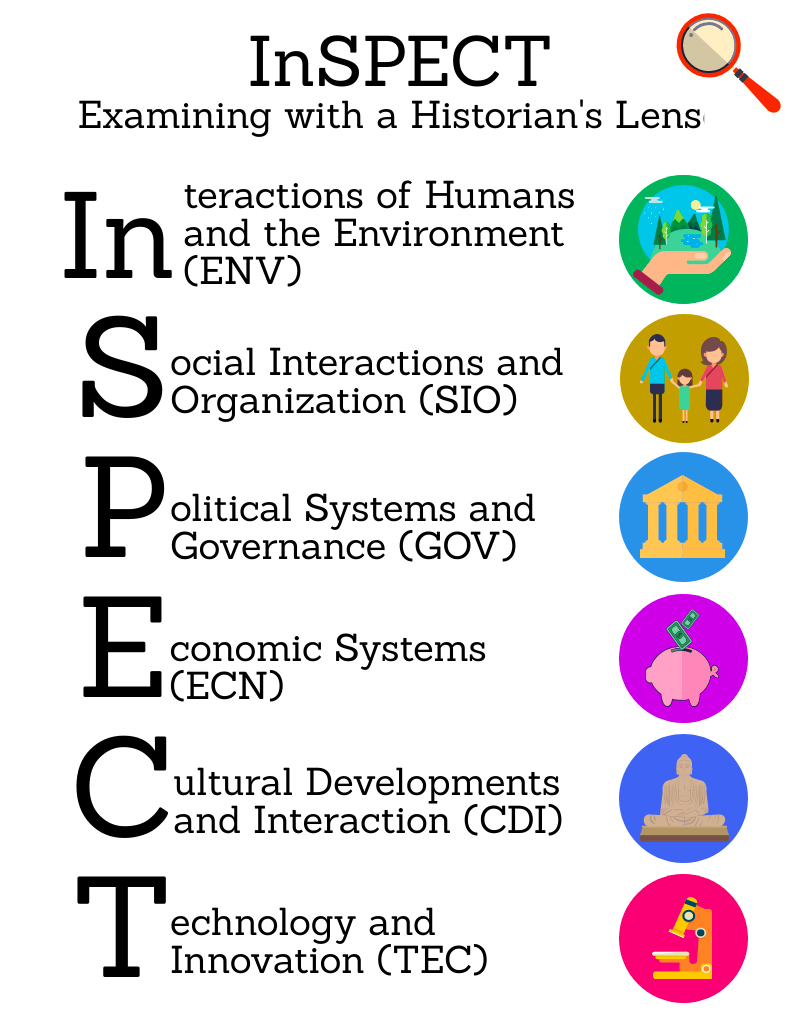
Ottoman, Safavid, Mughal, Russian, Ming/Qing all rise.GOV · TECWhat to studyFive major Eurasian land empires expanded between 1450 and 1750, all relying on gunpowder weapons. The Ottoman Empire conquered Constantinople in 1453, then much of southeast Europe, the Levant, and North Africa. Safavid Persia established Twelver Shiism as state religion. Mughals ruled most of South Asia from 1526 forward. Romanov Russia expanded eastward to the Pacific and west into Poland. Ming/Qing China consolidated control over Inner Asia. Common thread: cannon and infantry firearms changed warfare and statecraft.
Key termsGunpowder empires · Constantinople 1453 · Janissaries · Devshirme · Mehmed II · Suleiman the MagnificentExam focusIdentify common patterns (gunpowder, central bureaucracy, religious legitimation) AND key differences (Sunni vs. Shia, Hindu vs. Muslim subjects).Primary sourceOgier Ghiselin de Busbecq, Turkish Letters (on the Ottoman Empire), 1555 — Project Gutenberg
The Habsburg ambassador’s observations of Ottoman military and administrative organization — an outsider’s account of how Süleiman’s empire expanded and maintained control.Whose story is missing?“It passed through my mind that to wander from mountain to mountain, homeless and houseless, without country or abiding-place, had nothing to recommend it.” — Babur, Baburnama (Memoirs), recounting his wanderings after losing Samarkand, 907 AH / 1501–1502; trans. Annette S. Beveridge, 1921
Babur (1483–1530) wrote the first autobiography in Muslim literature—a frank, detailed memoir of his campaigns to found the Mughal Empire. He documented conquest not as inevitable triumph but as years of failure, displacement, and improvisation. His account shows what empire-building looked like from the inside: the chaos, the contingency, and the human cost that political histories of empire expansion erase. Read the source →
3.2
Empires: Administration
How land-based empires governed diverse peoples.GOV · CDIWhat to studyAll five empires faced the same challenge: ruling diverse populations with limited communication technology. Their solutions varied. Ottomans used the millet system (separate religious-legal communities) and devshirme child-levy to recruit Christian boys as Janissaries and administrators. Mughals under Akbar abolished jizya, employed Hindus, and patronized syncretic art. Qing relied on the Confucian civil-service exam plus Manchu military aristocracy. Russia tied serfdom to the state and ennobled service through the Table of Ranks. All used tax-farming, with mixed success.
Key termsMillet system · Devshirme · Mansabdari · Civil Service Exam · Cossacks · Tax-farmingExam focusCompare 2–3 administrative strategies. Be specific (e.g., “the millet system” vs. “they were tolerant”).Primary sourceAbu’l-Fazl, Akbar-Nama (on Mughal administration), c. 1590 — Internet Archive
Akbar’s court historian describes the Mughal revenue system and administrative structure — a model of how land-based empires extracted resources and governed diverse populations.Whose story is missing?“Turkey is a land in which nothing is lacking. If you wish, all can go well with you.” — Rabbi Isaac Zarfati (Tsarfati), letter urging European Jewish communities to emigrate to the Ottoman Empire, mid-15th century
Ha-Kohen (1496–c.1578) was a Jewish physician and historian who documented the expulsion of Jews from Spain (1492), France, and various Italian states—and their welcome in the Ottoman Empire. His comparative account of how different empires governed religious minorities reveals what administrative diversity meant in practice: the Ottoman millet system allowed Jewish, Armenian, and Greek communities to maintain their own courts, schools, and religious institutions in ways that Christian kingdoms did not. Read the source →
3.3
Empires: Belief Systems
Religious policy and cultural patronage.CDIWhat to studyReligious policy defined imperial legitimacy. Ottomans were Sunni Muslim but tolerant of Christian and Jewish subjects via the millet system. Safavids made Twelver Shiism the state religion of Persia—creating the Sunni-Shia geopolitical divide that persists today. Mughals oscillated: Akbar created a syncretic court religion; Aurangzeb reimposed jizya and provoked Hindu Maratha resistance. Counter-Reformation Catholicism drove Spanish and Portuguese imperial culture. Each empire used art, architecture, and patronage (Taj Mahal, Süleymaniye, Forbidden City) to project sacred legitimacy.
Key termsSunni-Shia split · Twelver Shiism · Jizya · Akbar · Aurangzeb · Sikhism · Counter-ReformationExam focusCite specific buildings or works that illustrate religious-political ideology. Don’t generalize about “tolerance.”Primary sourceMatteo Ricci, journals (on Christianity in Ming China), c. 1609 — Columbia University
The Jesuit missionary’s account of accommodating Christianity to Confucian culture — illustrating how land-based empires navigated religious diversity and used it strategically.Whose story is missing?“O servant, where dost thou seek Me? Lo! I am beside thee. I am neither in temple nor in mosque: I am neither in Kaaba nor in Kailash: Neither am I in rites and ceremonies, nor in Yoga and renunciation. If thou art a true seeker, thou shalt at once see Me: thou shalt meet Me in a moment of time. Kabir says, “O Sadhu! God is the breath of all breath.”” — Kabir, Songs of Kabir, trans. Rabindranath Tagore (1915), Poem I
Kabir was a weaver by trade, born into a low-caste family, who became one of the most influential religious voices of the Bhakti movement. His poetry rejected the authority of both Hindu Brahmin priests and Muslim clerics alike, insisting God was found in neither temple nor mosque but in direct, unmediated devotion. That syncretic, anti-institutional stance shaped Guru Nanak and the founding of Sikhism a generation later, and challenged the religious establishments this topic’s empires depended on to legitimize their rule. Read the source →
3.4
Comparison in Land-Based Empires
Compare administrative or cultural strategies.GOV · CDIWhat to studyStrong comparison FRQ topics: succession crises (Ottoman fratricide, Mughal wars of succession, Qing primogeniture); religious policy (Akbar vs. Aurangzeb; Ottoman tolerance vs. Spanish expulsions); economic foundation (timar/iqta land grants vs. mansabdari ranks vs. Manchu banner system). All five empires also had similar weaknesses: tax-farming corruption, succession instability, and a slowness to adapt military technology that left them vulnerable to industrializing rivals in Unit 5.
Key termsTax-farming · Succession · Religious legitimation · Imperial overstretchExam focusFor “compare” essays: pick TWO specific strategies and explain why each empire adopted what it did. Cause matters.Primary sourceOgier Ghiselin de Busbecq, Comparison of Ottoman and European Military, 1555 — Project Gutenberg
Busbecq’s direct comparison of Ottoman discipline and European disorder is itself a comparative source — useful for analyzing what distinguished successful land-based empire-building across regions.Whose story is missing?“I was also taken in that city with my two brothers, and wherever the Turks to whom we were entrusted drove us in a band, and wherever we came to forests or mountains, there we always thought about killing the Turks and running away by ourselves among the mountains, but our youth did not permit us to do that; for I myself with nineteen others ran away from them in the night from a village called Samokovo.” — Konstantin Mihailović (Konstantin of Ostrovica), Memoirs of a Janissary (Turkish Chronicle), written c. 1490s — describing his own capture into the janissary corps at the fall of Novo Brdo, 1455
Mihailović (c. 1430–c.1501) was a Serbian Christian captured by the Ottomans around 1455 during the conquest of Smederevo. He served as a janissary for over a decade before escaping to write this memoir—one of the earliest first-person accounts of the devshirme system from the inside. His comparative observations of Ottoman versus Christian military governance show what the “administration of diverse peoples” looked like for the people being administered. Read the source →
Practice LEQ stem.
Connect to your study
Era page: see the Eras of World History hub for the period’s broader global context.
Practice: FRQ Lab · Practice MCQs · Unit 3 flashcards
The terms that stick.
Flip a card, then be honest: got it, or again? Missed cards come back first. 30 terms. Progress saves on this device and shows up in your plan.
Done reading? Run the cycle.
Six steps for this unit. Checks save on this device and show up in your plan.